

The sun rises early for nursing students, and the day in the life of a nursing student begins long before most people start their morning routines. We understand at Beal University Canada that nursing education demands more than traditional academic programs – it requires a careful balance of theoretical knowledge, practical skills, and real-world clinical experience.
Our nursing students face unique challenges that extend far beyond typical classroom learning. From intensive study sessions to hands-on clinical rotations, each day offers new opportunities to grow while testing personal limits and time-management skills.
The Reality of Morning Study Sessions
Understanding how a typical day in the life of a nursing student goes helps you prepare for the challenges of nursing school.
Most nursing students begin their day between 5:30 and 6:00 AM, often with coffee in hand and textbooks already open. The morning hours provide crucial quiet time for reviewing complex medical concepts, pharmacology details, and preparing care plans.
A day in the life of a nursing student typically starts with reviewing the previous day’s clinical notes and preparing for upcoming patient interactions. This morning preparation isn’t optional – it’s essential for providing safe, competent care during clinical rotations.
We’ve observed that our students using Beal University Canada’s 8-week Mod System find these morning study sessions more manageable because the structured module format allows them to focus on specific subject areas without feeling overwhelmed by competing coursework demands.
The hybrid learning format of our BScN program means students can access online materials during these early morning hours, reviewing recorded lectures or participating in virtual discussions before transitioning to hands-on activities later in the day.
Navigating Intensive Coursework Demands
Nursing education covers a broad range of knowledge areas, from anatomy and physiology to psychology, pharmacology, and evidence-based practice. Managing this coursework requires strategic planning and efficient study methods tailored for nursing education.
Our students typically spend 4–6 hours per day on coursework outside scheduled class time. This includes reading assignments, case study analysis, care plan development, and exam preparation across multiple subject areas simultaneously.
The 8-week Mod System at Beal University Canada addresses this challenge by organizing coursework into manageable modules rather than overwhelming students with concurrent year-long courses. This structure allows deeper focus on each subject area while maintaining steady progress toward degree completion.
| Study Time Distribution | Hours per Week | Module Focus |
| Reading & Research | 15–20 hours | Current module content |
| Case Study Analysis | 8–10 hours | Application-based learning |
| Exam Preparation | 10–12 hours | Assessment preparation |
| Clinical Prep | 6–8 hours | Patient care planning |
Students often struggle with the sheer volume of information required for nursing practice. We address this through our progressive curriculum design, which builds foundational knowledge before advancing to complex clinical applications.
Clinical Rotations: Where Theory Meets Practice
The transition from the classroom to the clinical environment is one of the most significant adjustments in a day in the life of a nursing student. Clinical experience at facilities like Sackville Memorial Hospital, Horizon Health Network, and Vitalité Health Network hospitals provides authentic healthcare experiences.
During clinical days, students typically arrive at healthcare facilities by 6:30 AM for pre-shift preparation. This includes reviewing patient assignments, understanding current treatment plans, and coordinating with nursing staff for the day’s activities.
Clinical rotations challenge students to apply theoretical knowledge in real-time patient care situations. The pressure of working with actual patients, families, and healthcare teams requires quick thinking, clear communication, and confidence in clinical skills.
We’ve structured our clinical partnerships to provide graduated exposure to healthcare environments. Students begin with observation experiences before gradually taking on more direct patient care responsibilities under close supervision.
The authentic nursing environments at our partner facilities expose students to the multifaceted daily responsibilities they’ll face as registered nurses. This includes medication administration, patient assessment, family communication, interdisciplinary collaboration, and documentation requirements.

Time Management Challenges and Solutions
Effective time management becomes crucial when balancing the demands of nursing education. Students must coordinate study schedules, clinical rotations, skills lab practice, and personal responsibilities within limited timeframes.
Common time management challenges include:
- Coordinating clinical schedules with coursework deadlines
- Balancing theoretical study with practical skill development
- Managing unexpected clinical experiences that extend beyond scheduled hours
- Maintaining energy levels throughout demanding days
- Finding time for self-care and stress management
Our 8-week Mod System directly addresses these challenges by providing predictable scheduling patterns. Students know exactly which subjects they’ll focus on in each module, enabling better long-term planning and resource allocation.
The structured six-module periods throughout our twelve-month academic cycle eliminate the chaos of managing multiple ongoing courses. This focused approach reduces decision fatigue and allows students to fully engage with current learning objectives.
Hands-On Learning and Skill Development
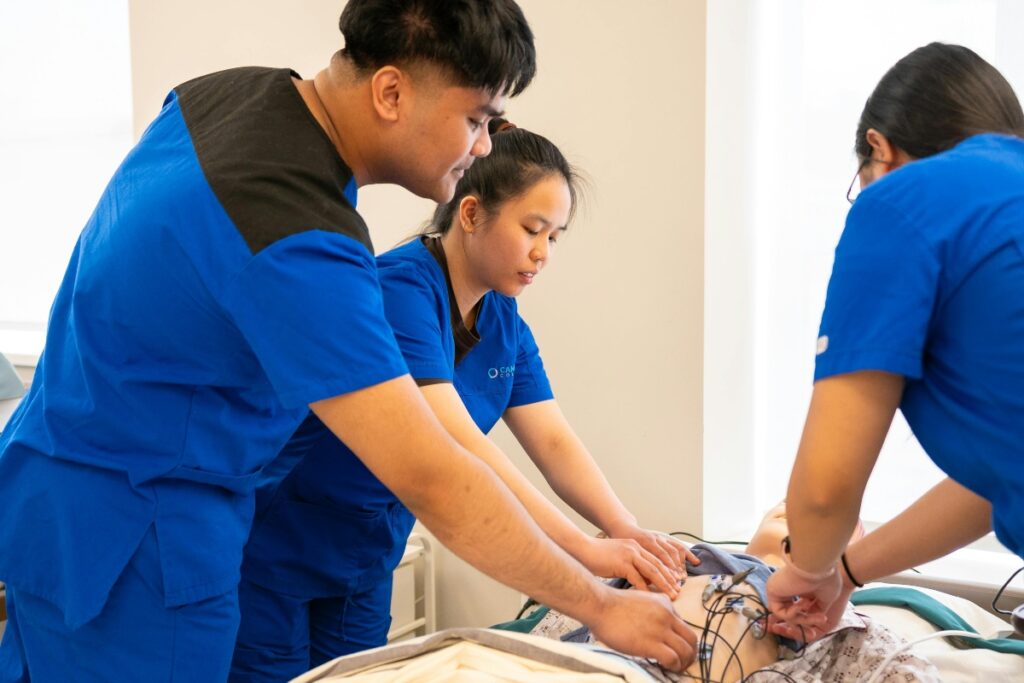
Nursing requires mastery of numerous technical skills, from basic patient care procedures to complex medical interventions. A day in the life of a nursing student includes significant time spent practicing these essential competencies.
Skills lab sessions provide safe environments for students to practice procedures repeatedly before performing them on actual patients. Common skills practiced include:
- Vital sign assessment and documentation
- Medication calculation and administration
- Wound care and dressing changes
- Patient mobility assistance and transfers
- IV insertion and maintenance
- Catheter insertion and care
- Emergency response procedures
- Patient education and communication techniques
The progression from simulated to real patient care requires careful preparation and confidence-building. We ensure students receive adequate practice opportunities before advancing to clinical applications.
Our hybrid format supports skill development by allowing students to review procedures online before attending hands-on practice sessions. This preparation maximizes the effectiveness of limited lab time and builds student confidence.
Managing Work-Life Balance
Maintaining personal well-being while pursuing nursing education presents ongoing challenges. Typical demands of a day in the life of a nursing student can easily overwhelm other life responsibilities and relationships.
Students often struggle with:
- Finding time for family and social relationships
- Maintaining physical fitness and healthy eating habits
- Managing financial pressures during intensive study periods
- Dealing with emotional stress from patient care experiences
- Balancing part-time work with educational demands
| Daily Schedule Component | Time Allocation | Balance Strategy |
| Study/Coursework | 6–8 hours | Structured module focus |
| Clinical Practice | 8–12 hours | Predictable scheduling |
| Personal Time | 2–3 hours | Protected daily minimums |
| Sleep | 7–8 hours | Non-negotiable priority |
We recognize that nursing students have lives outside their educational programs. Our 30-month accelerated timeline provides an efficient path to degree completion while maintaining manageable daily workloads.
The predictable scheduling of our Mod System allows students to plan personal activities and maintain important relationships throughout their educational journey.
Evening Study and Reflection
The learning day doesn’t end when clinical rotations or classes finish. Evening hours typically involve additional study, assignment completion, and reflection on the day’s experiences.
Many students use evening time for:
- Reviewing and organizing clinical notes
- Completing written assignments and care plans
- Preparing for upcoming exams or presentations
- Reflecting on patient interactions and learning experiences
- Collaborating with classmates on group projects
This reflection time proves crucial for integrating theoretical knowledge with practical experiences. Students need time to process complex patient situations and identify areas for continued learning and improvement.
Our online course components support flexible evening study by providing 24/7 access to learning materials. Students can review lectures, participate in discussions, and submit assignments according to their personal schedules and energy levels.
Building Sustainable Habits for Healthcare Careers
The challenges in a day in the life of a nursing student serve as preparation for the demanding schedules and responsibilities of professional nursing practice. The habits and routines developed during nursing education often carry forward into healthcare careers.
Successful nursing students develop:
- Consistent daily routines that prioritize essential activities
- Effective stress management and self-care practices
- Strong time management and organizational systems
- Collaborative relationships with peers and mentors
- Continuous learning attitudes and growth mindsets
We focus on helping students build these sustainable habits throughout their educational experience. The structure of our program supports habit formation by providing consistent expectations and routines.
Our clinical partnerships with Horizon Health Network and other regional healthcare facilities are yet another reason why so many students choose Beal University. These partnerships expose students to the daily realities of professional nursing practice, helping them understand and prepare for the demands of their future careers.
Technology Integration in Daily Learning
Modern nursing education incorporates technology throughout a day in the life of a nursing student. From electronic health records to simulation equipment, students must master technological tools alongside traditional nursing skills.
Our hybrid learning format introduces students to various educational technologies before they encounter similar systems in clinical settings. This preparation reduces the learning curve during clinical rotations and builds confidence with healthcare technology.
Students regularly use:
- Learning management systems for course materials and assignments
- Virtual simulation programs for skill practice
- Electronic health record systems during clinical rotations
- Mobile apps for drug references and clinical calculations
- Online collaboration tools for group projects and peer learning
Preparing for Professional Transition
As students progress through our 30-month program, a day in the life of a nursing student gradually shifts toward professional preparation. Advanced students take on increasing responsibility in clinical settings while completing capstone projects and preparing for national licensing examinations.
The transition from student to professional nurse requires careful preparation in:
- Independent clinical decision-making
- Professional communication and leadership skills
- Continuing education and career planning
- Ethical decision-making in complex situations
- Advocacy for patients and healthcare improvements
Our structured program design, preliminarily approved by the Nurses Association of New Brunswick, ensures students meet all requirements for professional nursing practice while developing the confidence and competence needed for successful healthcare careers.
Ready to Begin Your Nursing Journey?
At Beal University Canada, we understand the complexities of a day in the life of a nursing student because we’ve designed our entire program around addressing these real-world challenges. Our 8-week Mod System, hybrid learning format, and clinical partnerships create a supportive environment for your educational success.
Our Bachelor of Science in Nursing program provides the structure and flexibility you need to balance intensive academic demands with personal responsibilities. From morning study sessions to evening reflection, we support every aspect of your nursing education journey.
If you’re ready to experience the rewarding challenges of a nursing university with a program designed for your success, we invite you to learn more about how our innovative approach can support your goals.
Explore our program today and take the first step toward your nursing career.